Steam vs pressure washing — what's safe on Welsh slate?
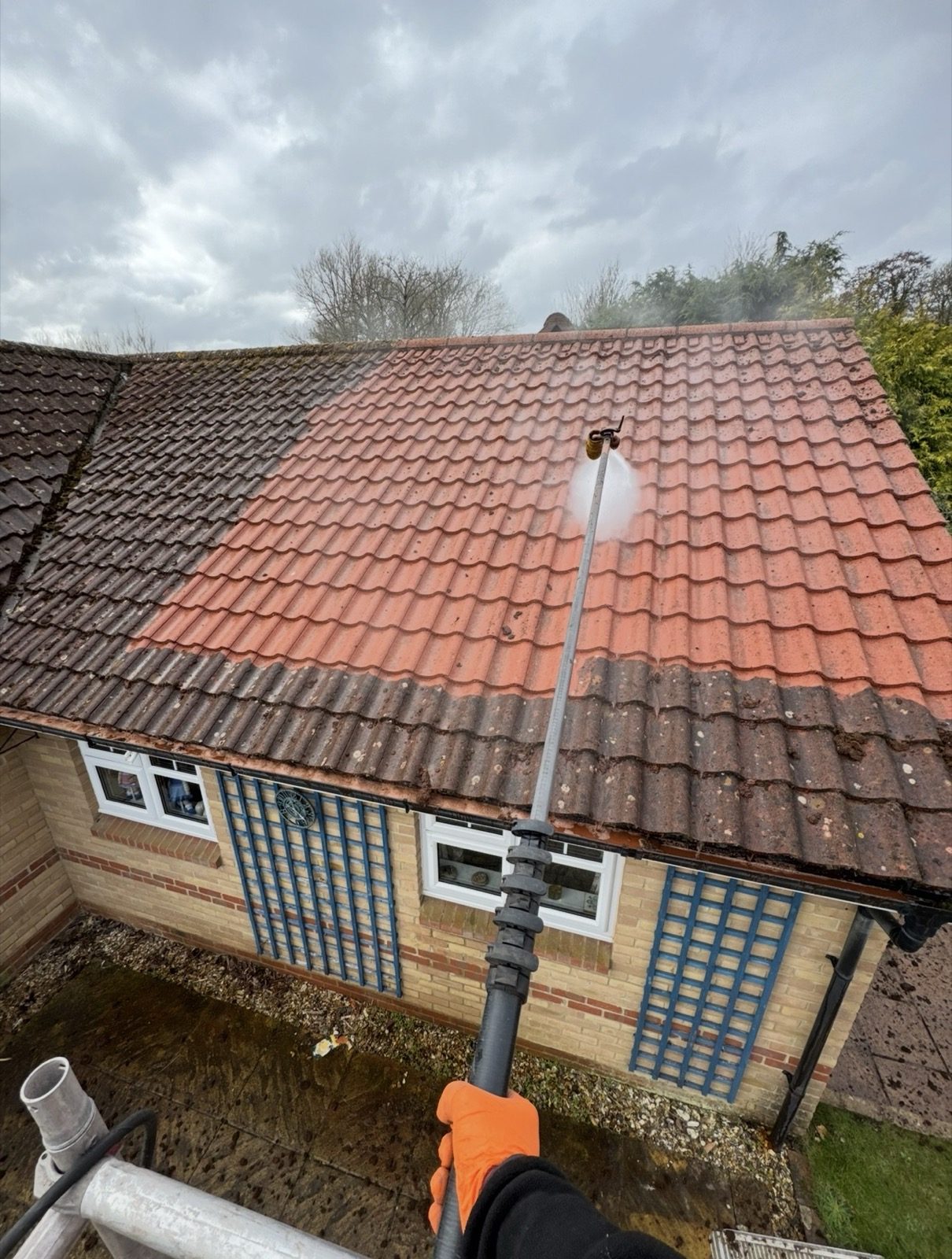
If a roof cleaner shows up at a slate roof with a 3000psi pressure washer, send them away.
Why Welsh slate is special
Welsh slate (the genuine article, from Penrhyn and Dinorwic quarries, on most pre-1960 South Wales roofs) is harder and more durable than imported slate. It's also irreplaceable — those quarries don't produce at scale any more. A broken slate isn't a £2 tile you swap out, it's a hunt for a salvage match.
Slate is also brittle. It splits easily under impact. A high-pressure jet aimed at a slate edge has the same effect as a hammer blow.
What pressure washing does to slate
- Smashes edges and corners on impact, especially on older slates
- Forces water under the slate laps, soaking the felt beneath
- Erodes the surface and exposes the layers to further weather damage
- Strips moss and lichen but at the cost of slate condition
What steam (and soft wash) does to slate
Hot steam at low pressure delivers heat without impact. Moss and algae die at root level. Nothing physical hits the slate hard enough to crack or chip it.
Soft wash is gentler still — chemical-only, applied at very low pressure, no thermal stress. For genuinely fragile or very old slate this is the only method we use.
Which method we choose for which roof
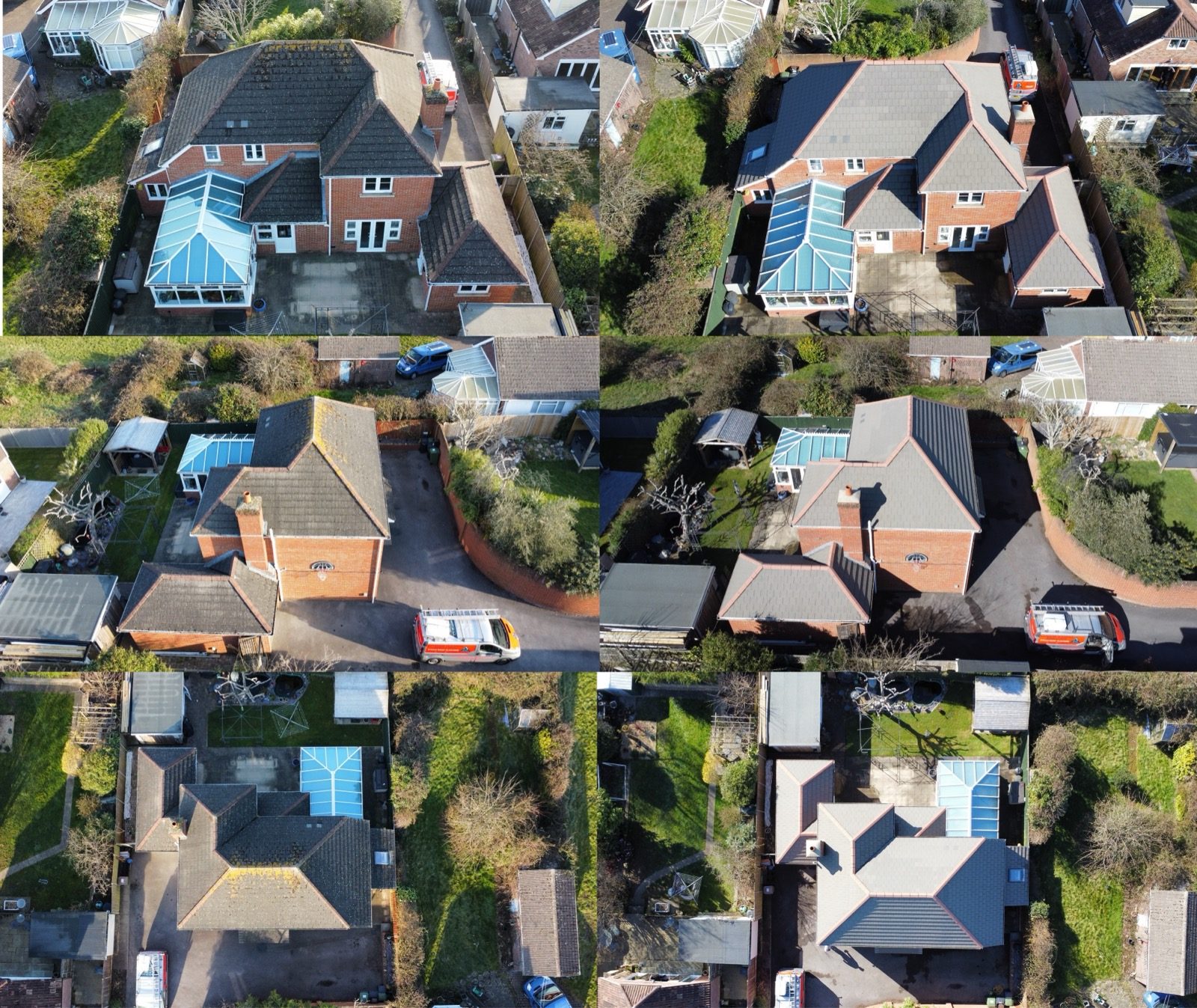
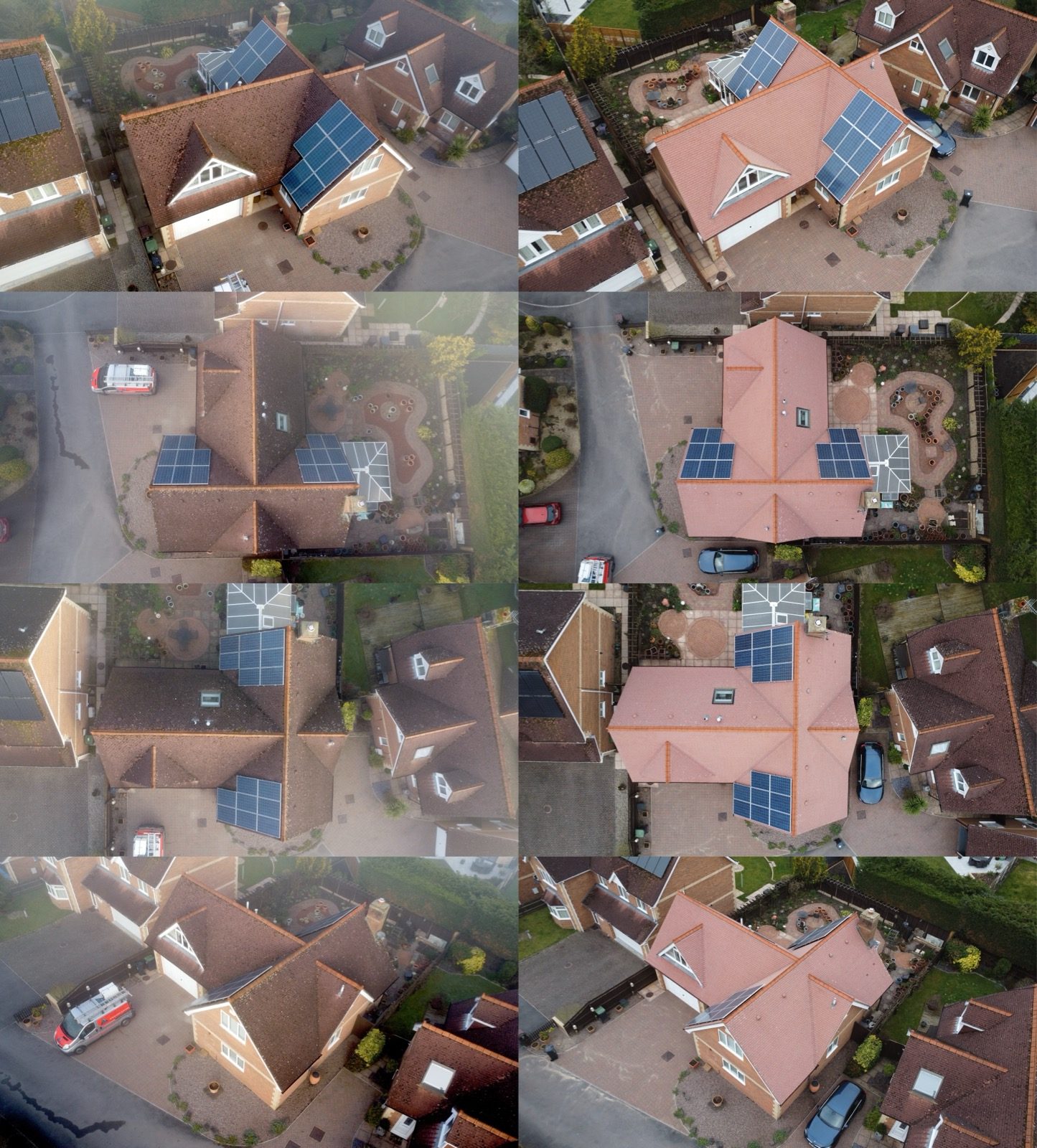
- Younger slate, good condition: steam clean if there's heavy moss, soft wash if it's mainly algae
- Older slate, some weathering: manual moss removal first, then soft wash, then biocide
- Very old or compromised slate: biocide-only — accept the algae stains and prevent regrowth, don't risk the slate
How to tell if your roof cleaner knows slate
Ask three questions. "Will you pressure-wash it?" If yes on a slate roof, walk away. "Will you walk on the slate?" Should be no on most slate, especially older. "How will you survey it first?" A drone or a careful ladder peek — not a guess from the ground.